In The Limits of Party, we examine congressional majority party efforts to enact their stated agenda priorities. Since the book’s publication we have continued to update our datasets and analyses on majority party agendas. Below are our data and analyses updated through the end of the 118th Congress (2023-24).
Party Agendas Data
Our updated party agendas data can be found here. Included are updated versions of the appendix tables from Limits of Party and an analyzable dataset of each party agenda item.
Updated Analyses
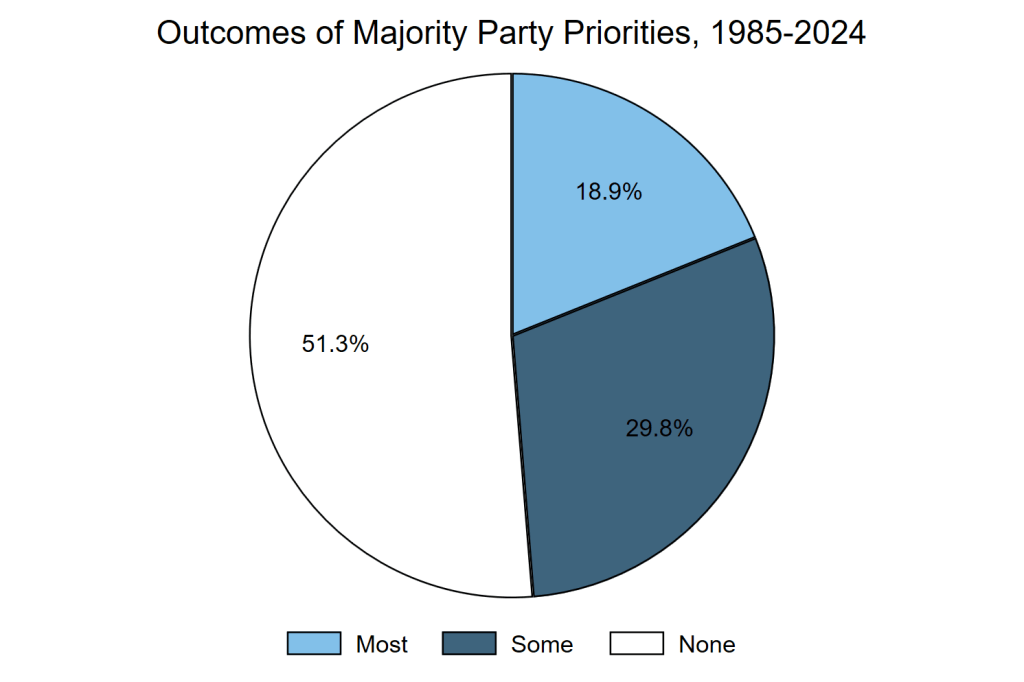
The patterns uncovered in The Limits of Party continue with data updated through the 118th Congress (2023-24). Majority parties fail on 51% of their stated agenda priorities, and most of the successes continue to be only partial successes, with the majority party achieving only some of what it set out to achieve.
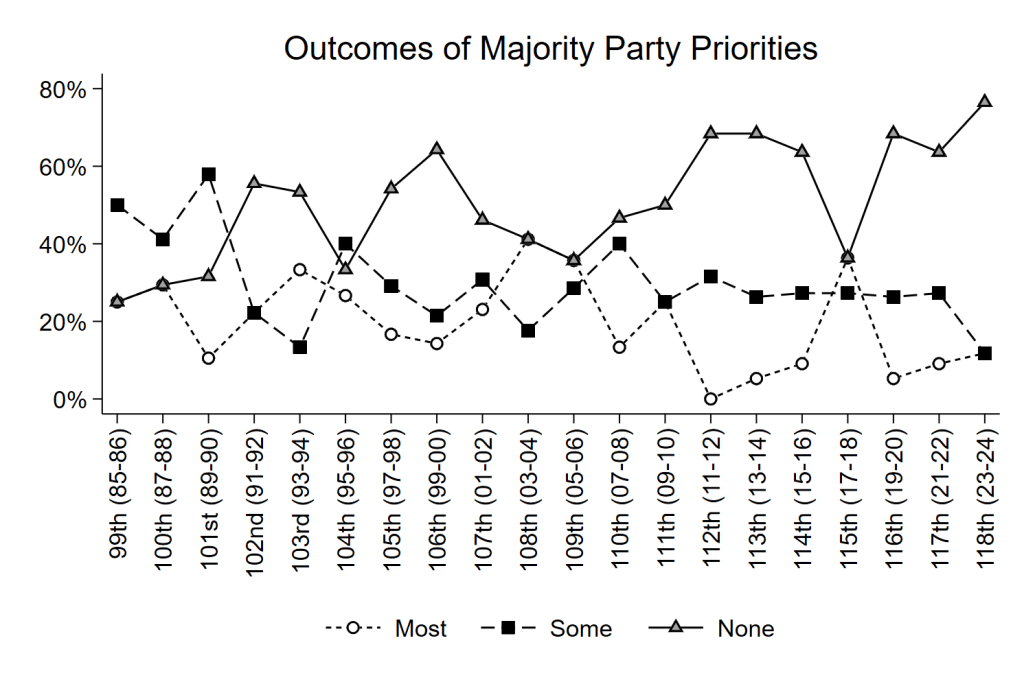
Patterns of success and failure continue to be the same over time, as well. Recent majorities continue to mostly fail on their agenda items, and achieve most of their successes in partial form. The 118th Congress (2023-24) continued this trend.
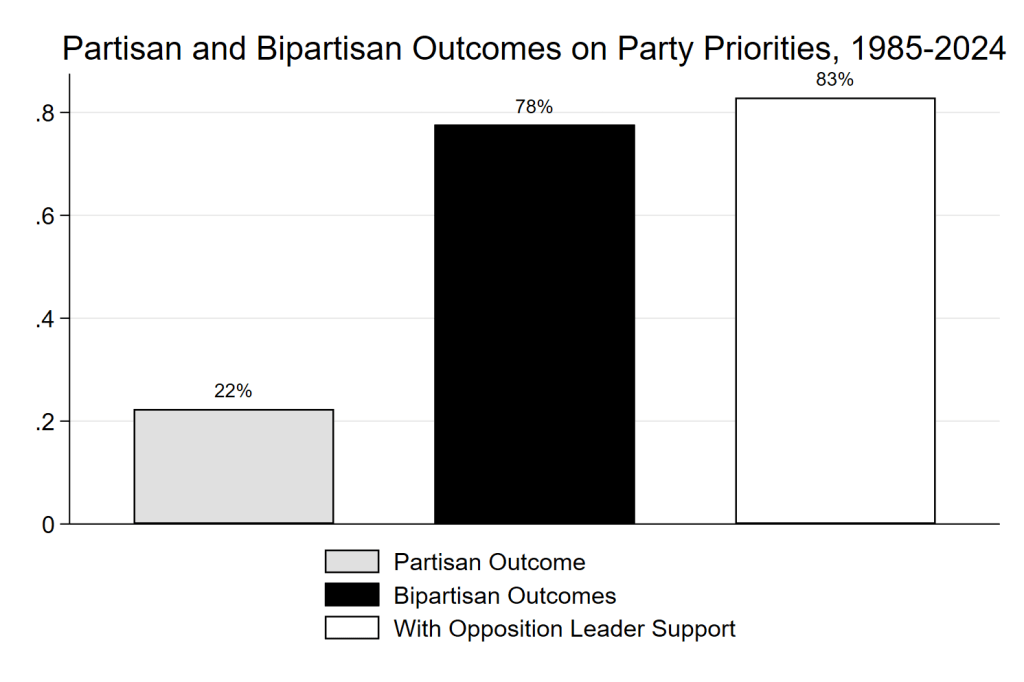
Most successes are also bipartisan in some way. Specifically, 78% of successes garnered support from a majority of the opposition party in one or both chambers. 83% garnered the endorsement of at least one opposition party leader in the House or Senate.
Failure rates for majority parties continue to hold steady, too. Rates of failure since the start of the 2010s have been elevated, with the exception of the 115th Congress.
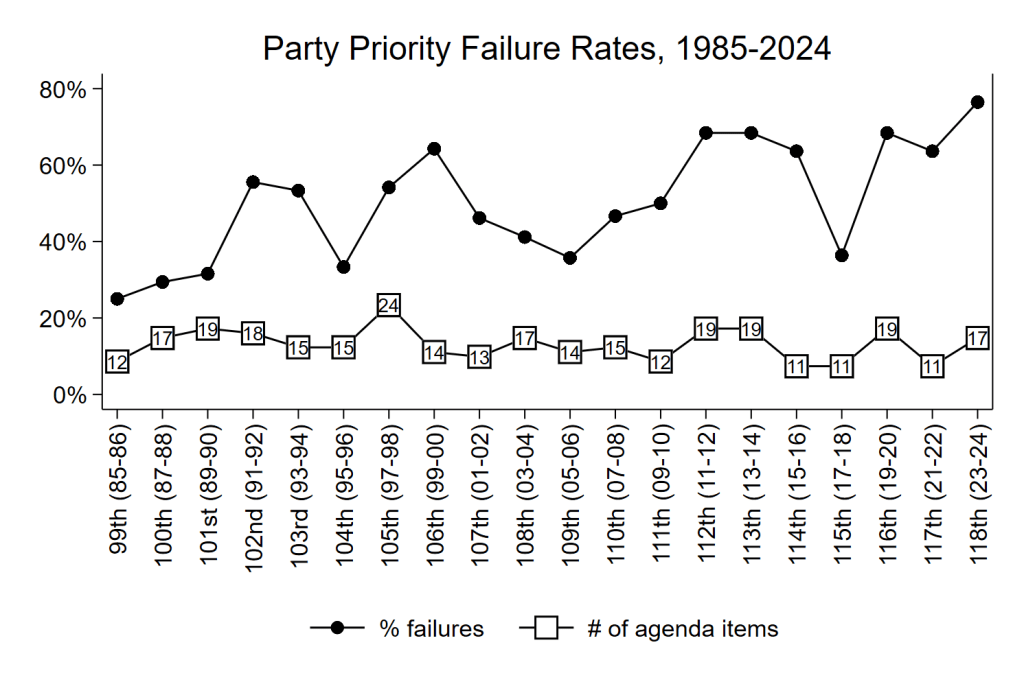
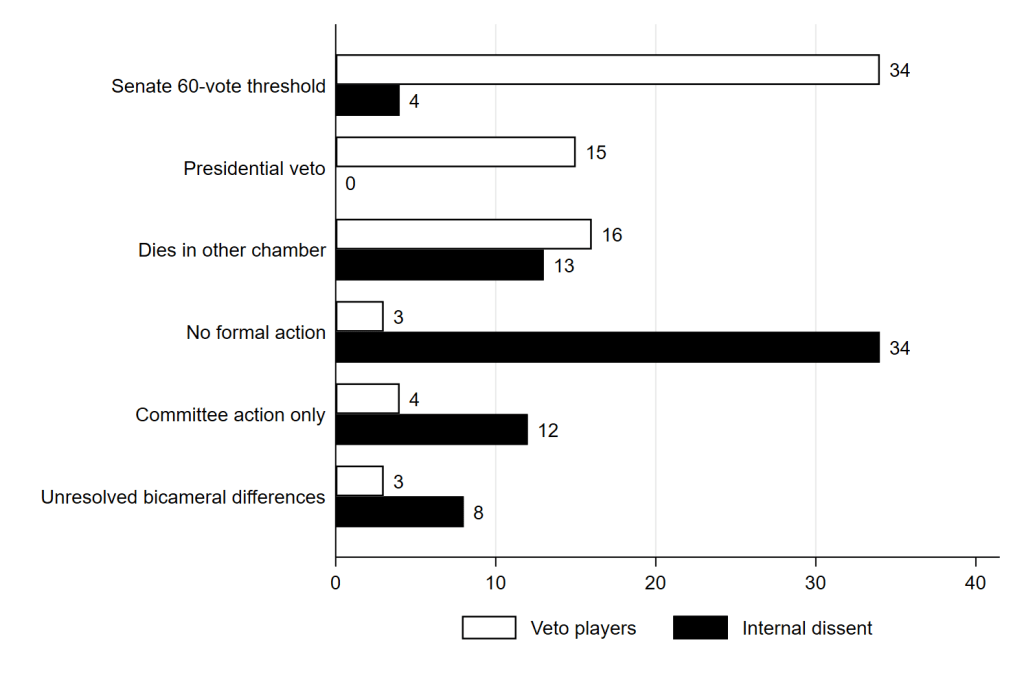
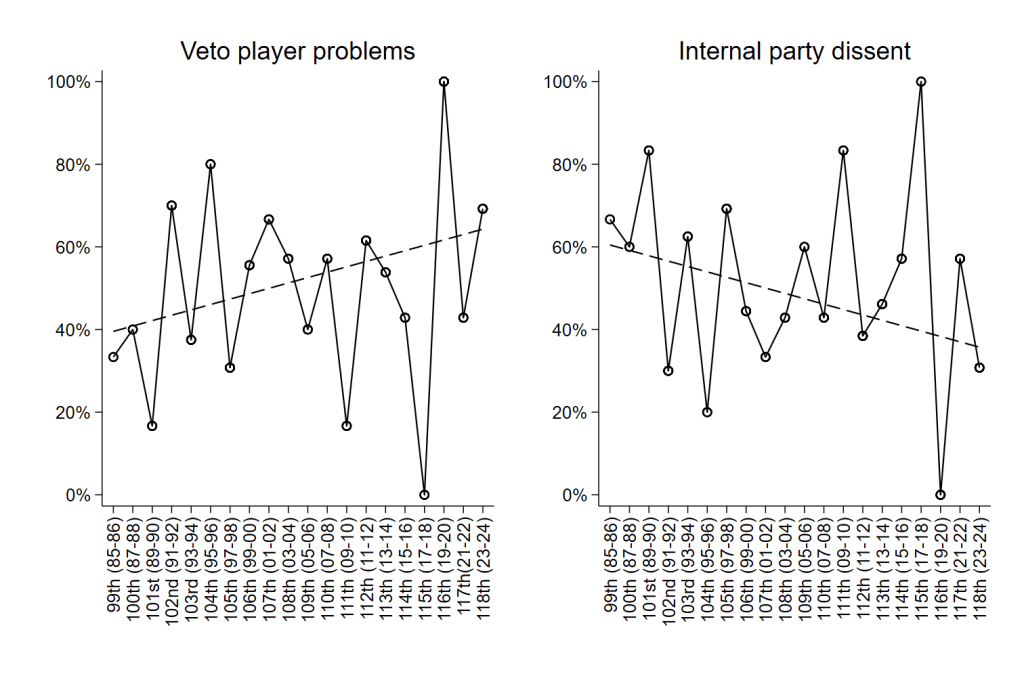
A mixture of causes continue to drive majority party failure. The Senate’s 60-vote cloture requirement continues to be a notable cause of failure. About 26% of majority party priorities failed due to a filibuster in the Senate. However, a similar share (27%) failed because the majority party was unable to take any action on the item whatsoever. In general, failures continue to split evenly between those caused by veto points controlled by the opposition party (53%), and those caused by disagreements internal to the majority party (47%). Recent years have shown opposition party “veto player problems” to be a bigger concern during periods of divided government.
Congressional majority parties achieve successes through various pathways that are detailed in the book. The most common is by “backing down” off of the more controversial aspects of their proposals and compromising across party lines. “Steamrolls” in which the majority pushes through their proposal over the objections of the other party, are relatively uncommon. Partisan steamrolls also have not become any more or less common over time. In fact, while the predominant pathways varies a bit from congress to congress, there are no discernable over-time trends in their usage.
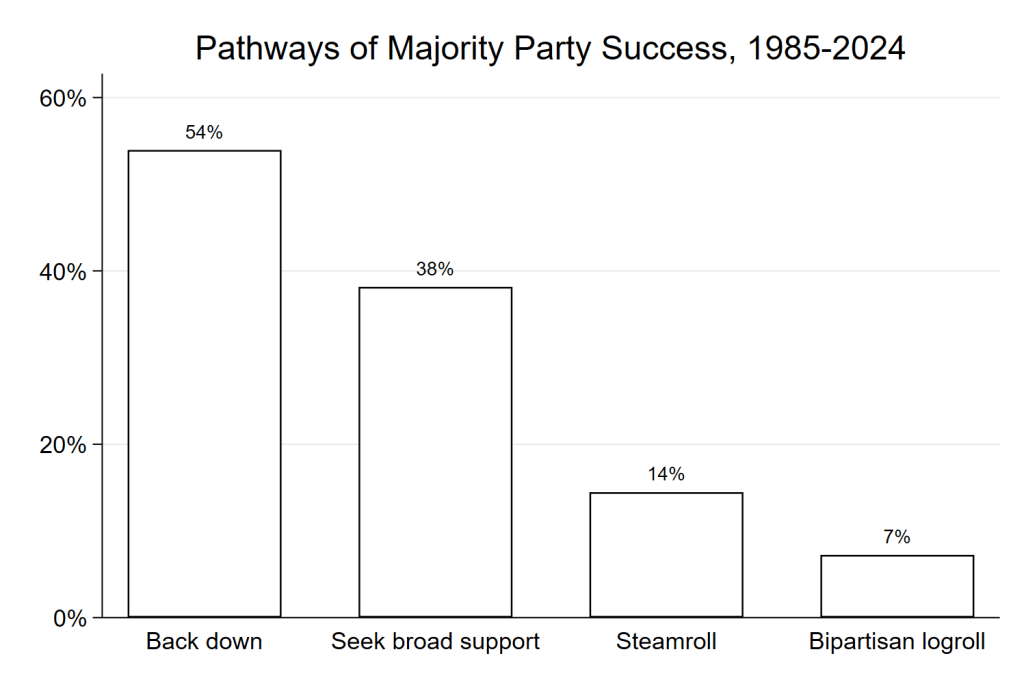
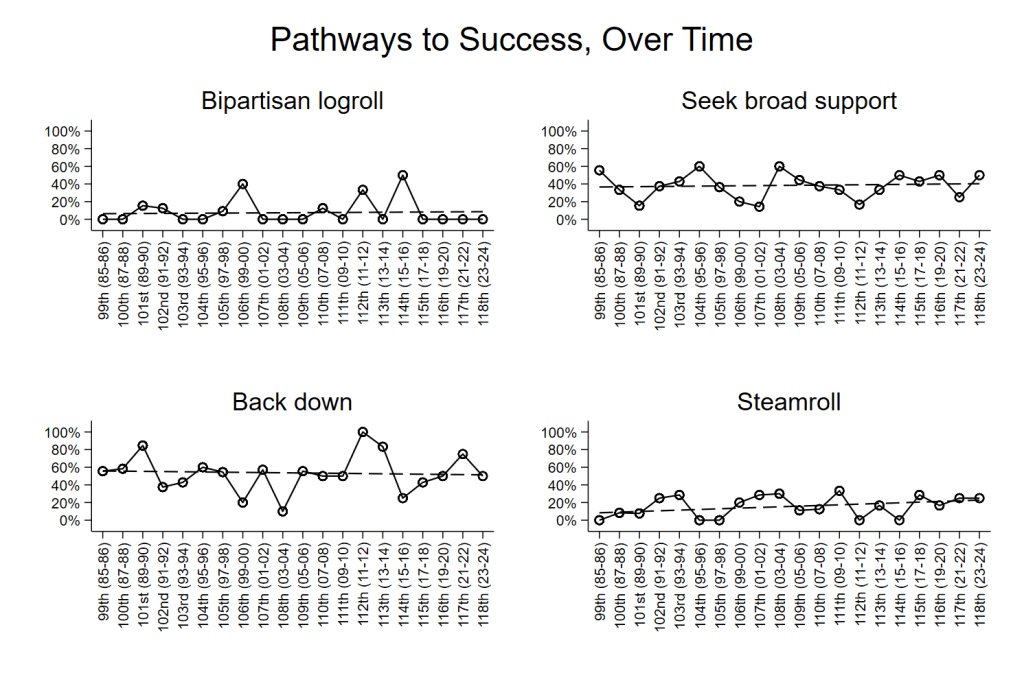
Pathways to success for majority parties do, however, vary depending on patterns of party control. Backing down is particularly common during divided government, or when the House and Senate are controlled by different parties. Seeking to pass proposals with broad, bipartisan support, on the other hand, is the most common approach for parties during unified party government.

 James M. Curry, PhD